

Why did I choose to study AuG? Because it covers many subject areas that are particularly important at the moment, namely sustainability, consumer education, promoting resilience and a healthy lifestyle!
With your consent, we store data on your device to analyze your usage behavior and seamlessly integrate external content for you. You can revoke your consent or make specific settings at any time.


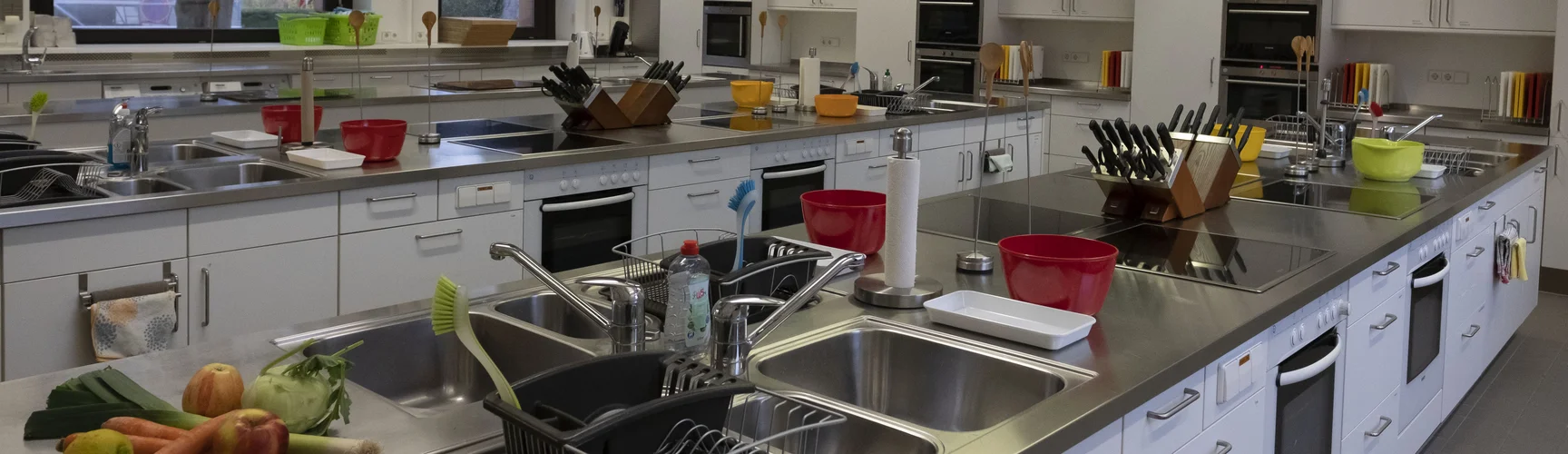
On the ‘Everyday Culture and Health’ course, you will learn how health and sustainability can go hand in hand in everyday life – for example, when it comes to diet or clothing. You can study this subject as part of our teacher training programmes, as well as through subject-specific modules in the Bachelor’s degree programmes in Early Years Education and Sport, Health and Leisure Education.
The teacher training programme combines subject-specific fundamentals with pedagogical concepts and their practical application – for example, in the teaching kitchen or the textile workshop. You will learn to critically reflect on your own everyday actions and to independently develop teaching projects and educational approaches that engage your pupils and actively shape everyday school life.
Shopping, cooking, eating, getting dressed, using a smartphone or looking after family and the home – all of these things affect not only our own health, but also the world we live in. The Everyday Culture and Health degree programme explores how everyday life can be shaped in a way that is more mindful, healthier, fairer and more resource-efficient.
The world faces major challenges: climate change, social inequality, health pressures and digital overload. The solutions do not begin solely at a political level – they begin in the everyday lives of each and every one of us.
This degree programme invites you to take a fresh look at everyday life – with an awareness of interconnections, a sense of responsibility and an openness to change. Everyday Culture and Health is a degree programme that equips you to shape your own everyday life in a reflective manner and to pass on this perspective to pupils, enabling them to adopt a reflective, health-promoting and responsible approach to their own daily lives.
The degree programme in Everyday Culture and Health involves an interdisciplinary examination of topics relating to everyday culture – particularly in the areas of nutrition and clothing.
Subject-specific modules: These modules cover the fundamentals of nutrition, home economics and textile sciences. They address ecological, sociological, psychological and economic aspects of everyday life – with a focus on consumer behaviour and health. The content is always taught within the context of everyday life and sustainable development.
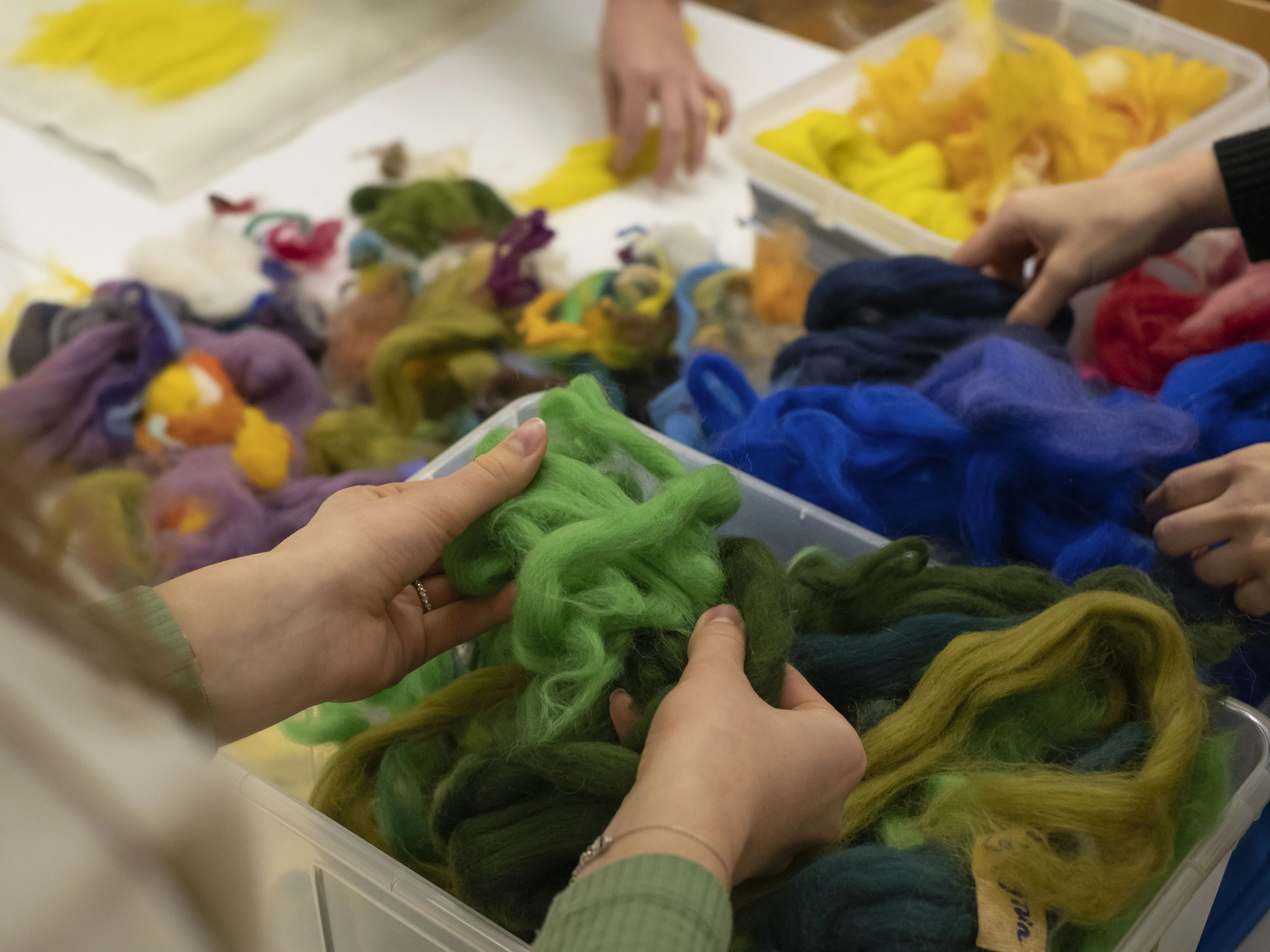
Subject-specific teaching methodology modules: In subject-specific teaching methodology seminars, you will learn how to translate subject-specific content into problem- and process-oriented learning. You will develop multi-perspective, interdisciplinary, action-oriented and real-life-based approaches tailored to the needs of different target groups.
Practical subject-specific modules: The practical subject-specific seminars and practical sessions focus on the culture and techniques of food preparation, as well as the design and analysis of textile objects. Here, creative, critical and reflective skills are fostered – from planning right through to implementation.
The Institute for Everyday Culture and Health is responsible for the degree programme, its content and its courses.
Why did I choose to study AuG? Because it covers many subject areas that are particularly important at the moment, namely sustainability, consumer education, promoting resilience and a healthy lifestyle!

In terms of content, the subject deals with topics relating to everyday culture, such as fashion, nutrition, lifestyle, health and sustainability. These subject areas fascinate me because they relate to our everyday lives and the lives of people in general. Overall, I am impressed by the modules and seminars in which I am able to work independently on practical projects using a variety of methods and techniques. For me, it is also something special to be able to teach this subject to pupils as a male teacher in the future.
You can study the subject ‘Everyday Culture and Health’ as part of the general studies module within the primary school teacher training programme, or as a standalone subject within the lower secondary school teacher training programme. The corresponding subject in lower secondary education is called ‘Everyday Culture, Nutrition and Social Studies (AES)’ and is offered as a compulsory elective.
Content from this subject is also incorporated into subject-specific modules within the Bachelor’s degree programmes in Early Years Education and Sport, Health and Leisure Education.
Bachelor’s degree programmes
Master’s degree programmes
Organisation
Karlsruhe University of Education
Building
3
Room
221
Phone
Availability
By arrangement. Please send me an email.
also known as FaVe or the student representative body
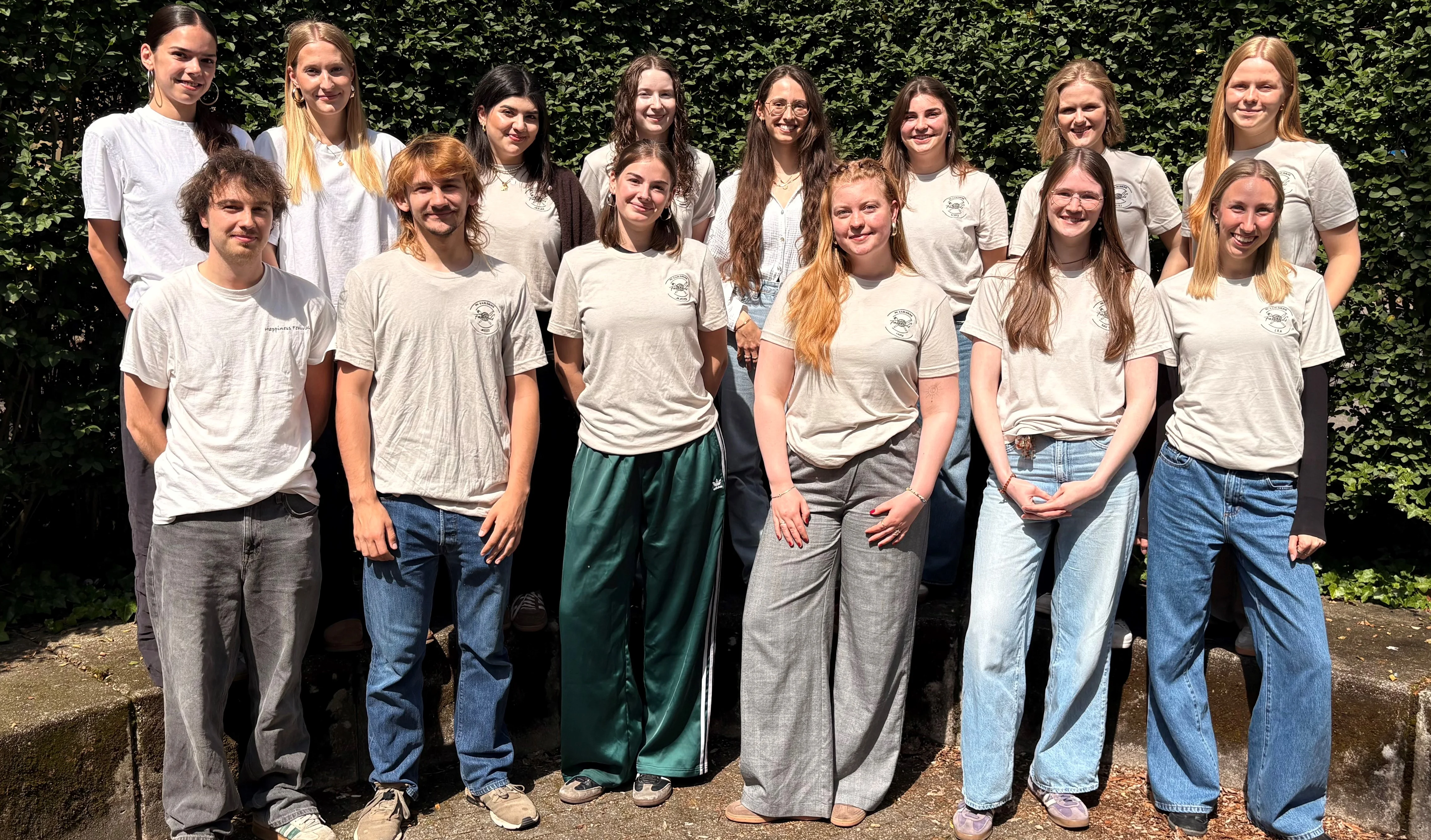
Hey! We’re the Student Council (FaVe) for Everyday Culture and Health! 🍉🧶
Are you studying Everyday Culture and Health (AuG) at the Karlsruhe University of Education, or are you interested in the subject? Then you’ve come to the right place! The AuG Student Council (FaVe) is made up of a diverse group of dedicated students who champion your interests. We represent all students on our course in dealings with lecturers and the university, and are your direct point of contact for any questions, concerns or ideas relating to your studies.
What do we actually do?
Why should you get involved?
The student council is the perfect opportunity for you to:
Important for all freshers:
During orientation week, we always organise our own FaVe evening so you can get to know us! Feel free to pop along – we’re really looking forward to seeing you!
Here’s how to get in touch with us!
If you have any questions about your studies, just get in touch with us directly – that is, with those of us who are already well into our AuG degree. We won’t bite and we’re more than happy to help!
Feel free to pop along to our meetings or drop us a line – we’re looking forward to seeing you!
Your FaVe AuG
Updated on 31 August 2026 by Juliane Yildiz