

If you want to get people moving, you need to understand how exercise works – physically, mentally and socially. That is exactly what you will learn with us.
With your consent, we store data on your device to analyze your usage behavior and seamlessly integrate external content for you. You can revoke your consent or make specific settings at any time.


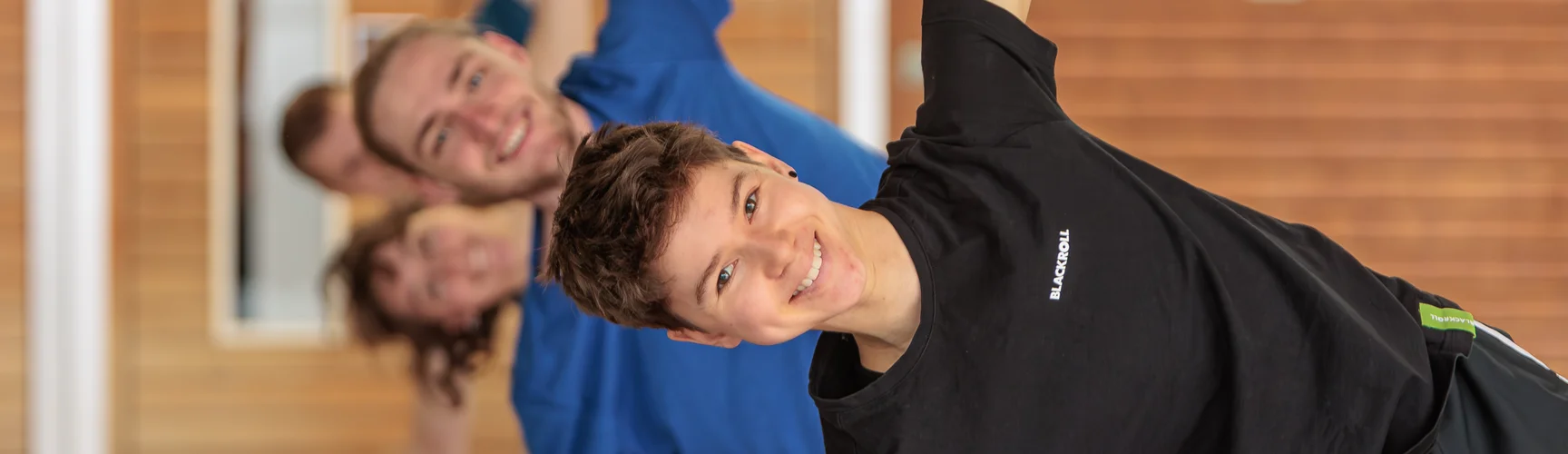
The Bachelor’s degree programme in Sport, Health and Leisure Education (BA-SGF) equips students with the skills to understand the interrelationship between quality of life, health, leisure, physical activity and sport. This enables you to develop professional programmes that promote health and physical activity, as well as to advise individuals and organisations on matters relating to leisure activities.
The degree programme has an interdisciplinary focus. In particular, the Institute for Physical Education and Sport provides the pedagogical foundation. The programme director is also based there. With this degree programme, we offer you a study programme which, whilst not part of teacher training, is situated within the field of education and related disciplines.
If you want to get people moving, you need to understand how exercise works – physically, mentally and socially. That is exactly what you will learn with us.
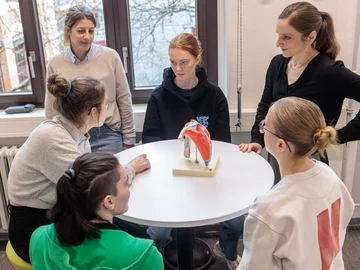
Discussions in small groups and the close, personalised support provided by the teaching staff create a motivating learning environment and encourage in-depth engagement with highly topical issues facing a health-conscious society, such as ‘stress’ and ‘sleep’. This combination of knowledge transfer, practical application and personal support ensures that your day-to-day student life is varied and vibrant.
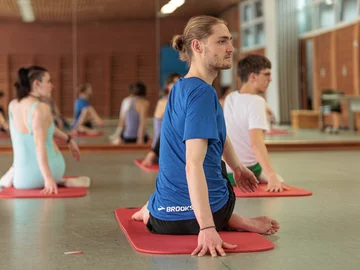
This degree programme equips you with a wide range of skills, enabling you to enter the world of work immediately after graduation. Career opportunities are available in the:
Graduate surveys have shown that this Bachelor’s degree also provides an excellent foundation for further Master’s programmes and prepares our students exceptionally well for them.
To be admitted to a degree programme at our university, you must provide evidence:
General Higher Education Entrance Qualification.
Subject-specific university entrance qualification that includes eligibility to study at a teacher training college in Baden-Württemberg. This is possible with any subject-specific university entrance qualification obtained in Baden-Württemberg or a completed degree from a university of applied sciences. Unfortunately, a university of applied sciences qualification does not entitle you to enrol on this Bachelor’s degree programme.
If you do not meet these entry requirements, you may, under certain conditions – possibly following the successful completion of a Delta or aptitude test – be admitted to study at a university of education in Baden-Württemberg. No further formal requirements for the programme are currently required. Consequently, there is no practical entrance examination as a prerequisite for admission to the programme; nor is proof of having completed a ‘social year’ required. Qualifications acquired elsewhere may be recognised provided the admission requirements are met, but they do not replace these requirements.
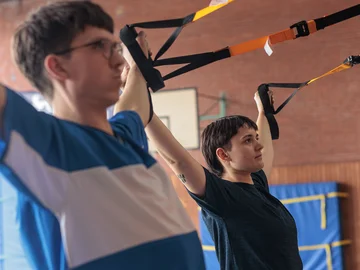
The degree programme combines academic principles with practical health promotion. Students develop, test and evaluate target-group-specific physical activity and prevention programmes in a variety of contexts and settings (for example, in pre-schools, workplaces, sports clubs, gyms or care homes for the elderly). As an SGF student, you will receive concrete answers to questions such as:
The personalised support and direct interaction between students and lecturers create a supportive learning environment in which you can develop both professionally and personally. The practical course content and the two work placements pave the way for a career in the health and fitness sector. We’ve captured moments from the course on camera and gathered some feedback from our students.
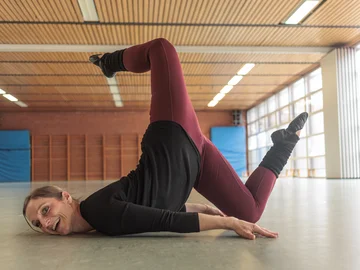
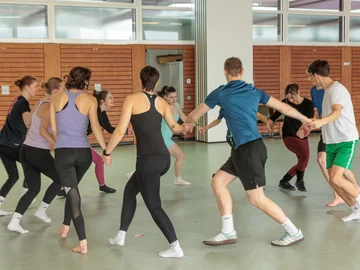
In the seminar ‘Aesthetic and Artistic Forms of Movement’, students gain an insight into various dance styles and, each year, learn a set choreography which they perform at their dance examination.
In the current module handbook, you will find detailed descriptions of the 18 modules you are required to complete.
If you have already completed a vocational training programme relevant to your degree programme, you can, following successful admission, check whether and to what extent parts of your vocational training or the skills acquired through it can be recognised as equivalent to academic credits. Please refer to the overview of credit recognition options for further details. The forms for credit recognition can be found in the members’ area of our website under the ‘Programme-specific information and documents’ section.
During the degree programme, students must complete a career-oriented placement (Module 5) and a professional qualification placement (Module 14), each comprising 150 hours, which may lead to work-related Bachelor’s theses. The work placement framework outlines the options for choosing work placement positions, which students are responsible for securing themselves.
In addition, during the course of your studies in the field of sport, you will undertake two (fee-paying) projects:
You can complete up to three modules (including placements) at our partner universities abroad. Our university works closely with universities in the USA, Australia, the UK, France, Turkey and Sweden.
Further information is available from our university’s International Office.
Organisation
Karlsruhe University of Education
Building
3
Room
217
Phone
Availability
Office hours for the 2026 summer term:
Appointments must be made in advance (!) by email, either
a) in person or
b) via a video call on Webex (you will receive an invitation link once your appointment has been confirmed)
Updated on 11 September 2026 by Kordula Manegold