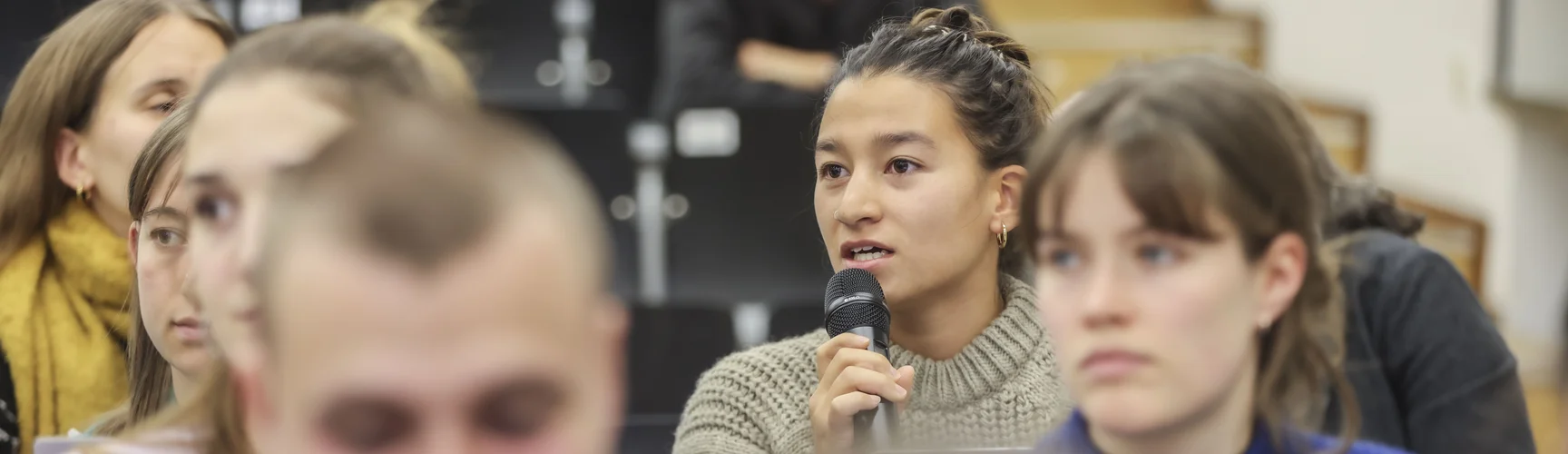
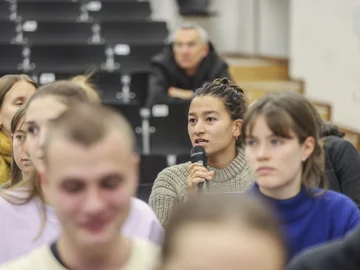
In einem Hörsaal spricht eine Studentin im Publikum in ein Mikrofon.

Master's Degree Programme in Migration, Education and Democracy

Strengthening pluralism and democracy, recognising discrimination, fostering participation!

This interdisciplinary Master’s programme prepares students for roles relating to (refugee) migration, pluralism, democracy and education. The programme provides a comprehensive theoretical, empirical and methodological foundation covering migration flows, social pluralisation (particularly linguistic and religious), human rights and democracy, as well as the field of migration and education. Professional expertise and practical skills are acquired through the following specialisations: political education (and educational work), integration/inclusion, and the design of (continuing) education programmes that are diversity-conscious and critical of discrimination and racism, as well as counselling, leadership and organisational development.
 

In this degree programme, we address the following questions, amongst others:

How do the backgrounds and trajectories of migration movements differ? What is a migration regime? What does the human right to education entail? To what extent does migration pose a challenge to democracy? To what extent do formal education programmes not only provide opportunities for participation but also perpetuate social inequalities? How do differences in the prestige of languages arise, and how does racism manifest itself in language? What role do migration and fear of migration play in the discourse of the New Right? How can coexistence between people of different religious affiliations be shaped? How can institutions be designed to counter racism and discrimination? How can civic education, in times of growing social inequality, polarisation, hostility towards human rights and democracy (racism, anti-Semitism, right-wing extremism, fake news) help ensure that both young people and adults can make judgements and act in accordance with human rights and democratic principles?

This degree programme replaced the Master’s programme in Intercultural Education, Migration and Multilingualism (IMM) in the winter semester 2025/26.

Application deadline
15 July
Authorisation
limited
Duration of study
4 semesters
Scope
120 CP
Conclusion
Master of Arts
Start of studies
Winter term

Entry requirements


  • A university degree or at least an equivalent qualification in one of the following fields of study or a related subject area: Education and Educational Sciences (including Social Work/Social Pedagogy, Special Needs Education, Vocational Education, Teacher Training Programmes, Early Childhood Education), Social Sciences (including Sociology, Political Science, History, Geography), Linguistics and Literary Studies (including German Studies, English Studies, Romance Studies, Applied Linguistics, Translation Studies), Psychology, Media Studies, Cultural Studies, Religious Studies, Theology, Philosophy, Law and Public Administration, International and Intercultural Management, Health Sciences. The degree programme on which the qualification is based must comprise a minimum of 180 credit points (CP) or have a standard duration of at least three years.
  • International applicants must have sufficient knowledge of German.

Learning objectives and skills


Through discipline-specific, interdisciplinary and transdisciplinary fields of research and methodologies, you will acquire a broad and sound theoretical, empirical and methodological knowledge. This is deepened and expanded through independent research and individually supervised projects. The diverse, multidisciplinary composition of the year groups, as well as integrated placements and the opportunity to undertake study visits to other universities, also help to broaden your own perspectives.

With a view to various professional fields, we provide you with practice-oriented theories, concepts and methods relating to political education (and related work) in different fields, to inclusion/integration, and to the diversity-conscious, anti-discriminatory and anti-racist design of education, training, counselling and organisational processes. We support the development of the ability to communicate research findings, evaluate and further develop fields of practice in a reflective, academically sound and practically relevant manner.

We place particular emphasis on fostering a critical reflection on inequality and power structures, examining how patterns of thought and action, as well as positions taken – including within the research process itself – are embedded in transnational historical, cultural, media-technological, organisational, political and legal contexts.


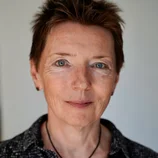
Porträt Mechtild Gomolla.

It is not only in the field of education that professionals and institutions are increasingly being called upon to develop their work content and practices, staffing structures and organisational cultures in a way that is mindful of diversity and critical of discrimination. This Master’s programme will equip you to take on these responsibilities across a broad spectrum of education, consultancy, leadership, development and research in a wide range of practical fields.

Prof. Dr. Mechtild Gomolla Programme Director

Course content


Over four semesters, you will acquire a fundamental body of theoretical, methodological and empirical knowledge in the relevant disciplines (education, social sciences, cultural studies, linguistics and theology). You will gain broad and in-depth knowledge of the theoretical-systematic, historical, empirical and inter- and transnational comparative aspects of

  • education and pedagogy in the context of global developments (including international (refugee) migration, digitalisation and climate change)
  • discourses on education in (post-)migration societies (including those on plurality, nation(alism), subjectification and socialisation, integration/inclusion, colonialism, racism and discrimination, right-wing populism and right-wing extremism, and democracy)
  • the social, (colonial) historical, geographical, legal and political conditions, processes and consequences of (refugee) migration, as well as dynamics of inclusion and exclusion in migration societies
  • individual, societal and institutional multilingualism
  • theories, action frameworks and methods of political education (and related work), integration/inclusion and anti-discrimination work
  • fundamental questions and discourses surrounding cultural and religious plurality and diversity

You can set your own areas of specialisation, for example, in the compulsory elective module spanning several semesters (Module 4). 

Module Overview

You will earn a total of 120 CP across ten modules. We offer modules 1 to 3 in the first semester and modules 5 to 7 in the second semester. Compulsory elective module 4 spans both semesters. In this module, you have the opportunity to choose up to four compulsory elective seminars from other Master’s programmes: ‘Biodiversity and Environmental Education’, ‘Digital Education: Psychology, Cognition, Design’ and ‘Cultural Mediation’. Parts of Modules 4 and 6 are taught in English. The authoritative reference for the course content can be found in the programme’s module handbook.

Module titleContentGrading
Module 1: Education/PedagogyEducation/Pedagogy in the Context of Global Developments5 CP
Module 2: Education in the (post-)migration society

Refugee/Migration and Education: Problem Areas and Discourses

Critique of racism and professional (self-)reflexivity

Theory-Practice Perspectives I

10 CP
Module 3: (Refugee) Migration and Society

Migration processes in modern societies

Migration – local and global

Migration and Space

9 CP

Module 4 – Compulsory elective module: Interstices of Plurality.

Two sessions each in semesters 1 and 2

Actors, institutions and fields of practice in the context of migration and diversity

Current discourses on plurality and democracy

Multilingualism: Mediation and Criticism of Racism (in English)

Religious education between secularism and plurality

12 CP
Module 5: Research Methods

Methods of Educational and Social Research

Research on Migration and Society

6 CP
Module 6: Multilingualism and Superdiversity

Multilingualism: individual – societal – institutional

Language Policy

Critical Language Awareness / Critical Discourse Analysis (in English)

9 CP
Module 7: Civic Education, Integration/Inclusion and Anti-Discrimination

Civic Education in a Society of Migration

Anti-discriminatory practice in education, counselling, organisational development and leadership

Theory-Practice Perspectives II

9 CP
Module 8: Interdependence StudyResearch workshop for the interdependence study – offered as 2 x 1 semester hour per week15 CP
Module 9: Placement

Internship supervision seminar

Completion of the placement (duration: 8 weeks)

15 CP
Module 10: Final dissertation

Colloquium

Master’s thesis

30 CP
Porträt Mechtild Gomolla.

We have long-standing links with professionals from a wide range of fields who regularly come to our university to lead seminars. This helps bridge the gap between theory and practice and gives you the opportunity to network within professional fields at an early stage.

Prof. Dr. Mechtild Gomolla Programme Director

Legal basis


And what happens after you’ve finished your degree?


The Master’s degree qualifies you to undertake doctoral studies both in Germany and abroad, and to pursue an academic career in research and teaching. Thanks to the qualifications it provides in the fields of social sciences, education, cultural studies and linguistics, and the breadth of its subject matter, the degree offers numerous career prospects, including in the fields of:

  • Social sciences, educational sciences, cultural studies, linguistics or literary studies (at colleges and universities or in non-university research institutions).
  • Political education and educational work (for example, as a consultant in youth welfare services, associations or foundations).
  • (Educational) counselling (for example, in anti-discrimination agencies or social education centres).
  • Cultural work (for example, in museums, memorial sites or theatres).
  • Administration and management (for example, as an integration officer, integration manager or equality officer).
  • Business (for example, as a diversity manager in companies).
  • Professional development and institutional quality improvement (for example, as a trainer or diversity management officer in state institutions or private companies).
  • Evaluation in the fields of education, social work, administration, business or policy consultancy.
  • International development cooperation.
Porträt Oliver Delto.

For me, my degree course was a formative experience; I made many contacts and formed friendships that continue to this day. Communication in the seminars was always respectful and took place on an equal footing. In terms of content, there is a good balance between theory and practical relevance. In particular, I was able to use the flexibility offered in the second year of my degree to refine my professional profile. Furthermore, I completed my degree with a heightened awareness of social inequalities; a perspective which, as I have found, is increasingly valued in various professional contexts.

Oliver Delto Graduate of the previous IMM degree programme
Porträt Jana Fingarova.

The degree programme, which was new at the time, opened up new horizons for my professional development. I came to greatly appreciate the freedom to delve deeper into specific fields of interest from an academic perspective. At the same time, I was able to discover numerous new aspects of migration societies for myself. The qualifications and specialist knowledge I acquired during my studies encouraged me to successfully complete a PhD in the field of intra-EU migration and the agency of mobile EU citizens.

Dr. Jana Fingarova A graduate of the previous IMM degree programme

Insights into study practices to date


The Master’s programme “Migration, Education and Democracy (MiBiD)” builds on the concept of the “Intercultural Education, Migration and Multilingualism (IMM)” programme, which has been running successfully for many years. Here you will find photos and media reports on the previous programme.

BNN, 10 September 2021: Local staff in Afghanistan – Many could have been saved – IMM graduate Viola Gassenschmidt on the failings in Afghanistan

Online lecture by Eva Hys at ibz on 22 April 2021: Civilian sea rescue and EU migration policy in the Mediterranean border region

ARD Mittagsmagazin, 15 November 2023: Jewish life in Germany

IMM student Irene Nardi has been awarded the 2022 DAAD Prize by the Karlsruhe University of Education! You can find out more in the article about the prize winner.

In this inter-university and cross-state collaborative project, carried out in partnership with the RPTU Kaiserslautern-Landau, renowned experts from Germany and abroad examine current social and institutional challenges and discuss innovative approaches to an inclusive, anti-discriminatory and democracy-oriented educational practice – ranging from school and university education, particularly teacher training, through to cultures of remembrance, and extending to educational initiatives for migrants and cultural education.

In the winter semester 23/24, a public lecture series entitled ‘Migration – Democracy – Education: (New) Divisions and Racism, and the Potential for Inclusion and Transformation in (Educational) Institutions and Society’ was organised.

Clicking this button will open privacy settings to load the video from an external provider
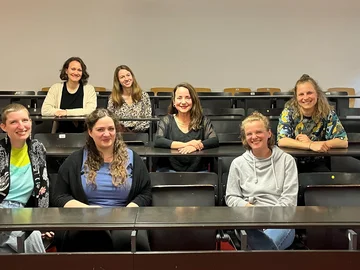
  • Eine kleine Gruppe Studierender sitzt ein einem Hörsaal.
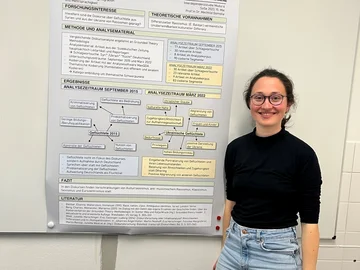
  • Eine Studierende präsentiert eine Poster mit dem Titel "Geflüchtete und Menschen aus der Ukraine".
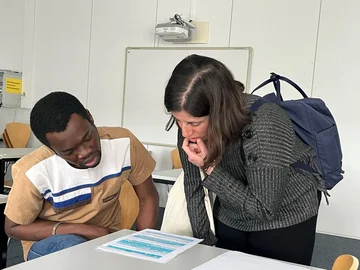
  • Zwei Studierende betrachten ein Arbeitsblatt auf einem Tisch.
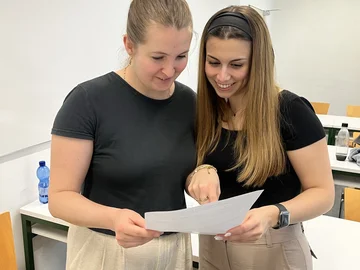
  • Zwei Studentinnen stehen in einem Seminarraum und betrachten gemeinsam ein Arbeitsblatt.
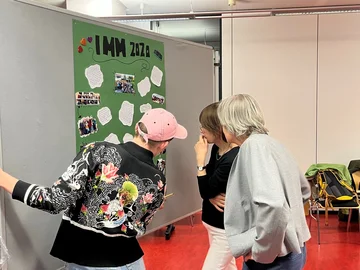
  • Drei Personen betrachten ein Poster mit dem Titel IMM 2020.

Do you have any questions?


Our programme co-ordinators will be happy to answer any questions you may have about the course content and career prospects. For all organisational matters relating to your application, clarification of entry requirements and other enquiries, please contact the Student Services Centre.

Team


Programme Director

Organisation

Karlsruhe University of Education

Building

2

Room

B228

Availability

By arrangement

Programme Coordination

Organisation

Karlsruhe University of Education

Building

2

Room

B221

Availability

Office hours for students in the 2026 summer semester: Wednesdays, 9.30–10.30 am. Please book via Stud.IP.

Teachers

Organisation

Karlsruhe University of Education

Building

2

Room

B221

Availability

By arrangement

Organisation

Karlsruhe University of Education

Building

3

Room

203

Availability

Consultation hours in my StudIP profile

Organisation

Karlsruhe University of Education

Building

4

Room

411

Availability

By arrangement

Organisation

Karlsruhe University of Education

Building

2

Room

B221

Availability

Office hours for students in the 2026 summer semester: Wednesdays, 9.30–10.30 am. Please book via Stud.IP.

Organisation

Karlsruhe University of Education

Building

2

Room

B226

Availability

By arrangement

Organisation

Karlsruhe University of Education

Building

2

Room

B228

Availability

By arrangement

Organisation

Karlsruhe University of Education

Building

2

Room

B232

Availability

By arrangement

Organisation

Karlsruhe University of Education

Building

4

Room

417

Availability

By arrangement

Organisation

Karlsruhe University of Education

Building

3

Room

225

Availability

By arrangement

Organisation

Karlsruhe University of Education

Building

2

Room

B301

Availability

By arrangement

Organisation

Karlsruhe University of Education

Building

4

Room

405

Availability

By arrangement

Organisation

Karlsruhe University of Education

Building

4

Room

410

Availability

Consultation hours during the lecture period in the summer semester: Wednesdays, 11.00 am – 1.00 pm.
Appointments for both in-person and online sessions can be booked via Stud.IP.
Online consultation hours are held as part of the Stud.IP course ‘Online Meetings – Birgit Neuer’.

Organisation

Karlsruhe University of Education

Building

2

Room

B302

Availability

Please register here:
https://t1p.de/parrisius-sprechstunde

If you have any questions about my courses, please contact:
fome-lehre@ph-karlsruhe.de

Organisation

Karlsruhe University of Education

Building

2

Room

B210

Availability

Consultation hours: Wednesdays from 11.45 am to 1.15 pm
and by arrangement

Organisation

Karlsruhe University of Education

Building

2

Room

B221

Availability

By arrangement

Organisation

Karlsruhe University of Education

Availability

By arrangement

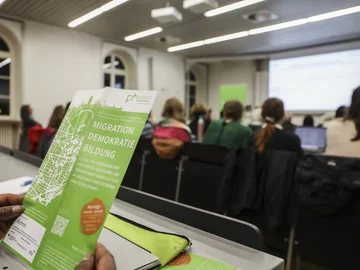
  • Jemand hält einen Flyer mit dem Titel "Migration, Demokratie, Bildung", im Hintergrund sitzen Studierende in einem Hörsaal.
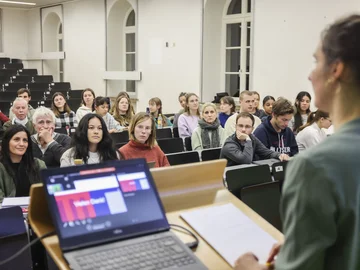
  • In einem Hörsaal hören Menschen einer Präsentation zu.
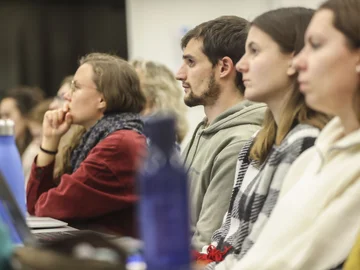
  • In einem Hörsaal sitzen Studierende in einer Reihe mit Laptops und Wasserflaschen auf den Tischen vor ihnen.
  • Eine Studentin folgt in einem Hörsaal einem Vortrag.
  • In einem Hörsaal spricht eine Studentin im Publikum in ein Mikrofon.

Updated on 24 September 2026 by Kordula Manegold