

Depending on your previous Bachelor’s degree, this degree programme will equip you for a wide range of career paths in the fields of digital knowledge transfer, content creation and research.
With your consent, we store data on your device to analyze your usage behavior and seamlessly integrate external content for you. You can revoke your consent or make specific settings at any time.



Digital knowledge transfer, the cognitive design of learning resources and an interdisciplinary perspective on the digitalisation of education are the three core competencies you will acquire on this degree programme. Upon completion of your studies, you will have a thorough understanding of the psychological phenomena underlying digital teaching and learning.
You will be able to design evidence-based learning resources and empirically investigate their effects. You will gain in-depth knowledge of working on and with digital learning resources, which you will be able to select, conceptualise and design based on findings from cognitive science research. You will develop your own perspective on the social change driven by the digitalisation of education and carry out your own research projects within interdisciplinary teams. In doing so, you will learn how to use relevant tools from the fields of research and design.
Depending on your previous Bachelor’s degree, this degree programme will equip you for a wide range of career paths in the fields of digital knowledge transfer, content creation and research.
Professional expertise and understanding
Practical skills and judgement
Communication skills
Personal skills
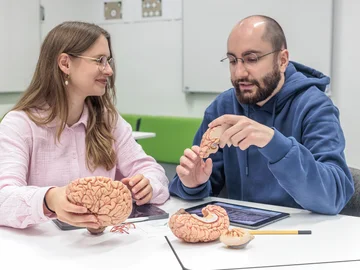
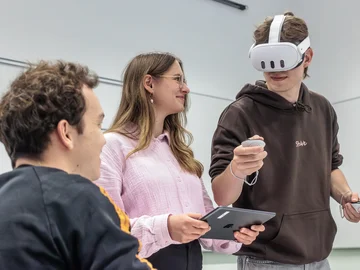
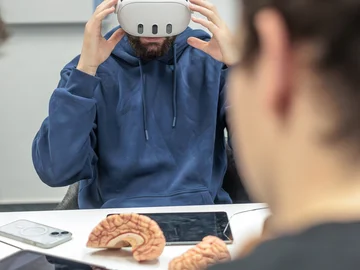
You will earn a total of 120 CP across ten modules. We offer modules 1 to 3 in the first semester and modules 5 to 7 in the second semester. Compulsory elective module 4 spans both semesters. Within this module, you have the option, in addition to the programme’s standard offering, to choose up to four compulsory-elective seminars from other Master’s programmes, for example from the programmes ‘Biodiversity and Environmental Education’ and ‘Migration, Education and Democracy’. The module handbook for the programme serves as the authoritative reference for all course content.
| Module title | Content | Credit |
|---|---|---|
| Module 1: Education/Pedagogy | Education in the Context of Global Developments | 5 CP |
| Module 2: Digital Teaching and Learning | Digital learning Learning in the digital space Motivation and Emotion | 10 CP |
| Module 3: Cognitive Design | Cognitive Design Cognition Digital Learning Media | 9 CP |
| Module 4: Specialised Studies (compulsory elective module) | Content Creation Advanced Methods Personality and Media Psychology Artificial Intelligence and Ethics | 12 CP |
| Module 5: Research Methods/Statistics | Research Methods/Statistics Empirical Methods in Digital Education | 6 CP |
| Module 6: Programming and Applications | Web Programming Multimodal Design Data collection software and data protection | 9 CP |
| Module 7: Design Practice and Research | Artificial Intelligence in the Context of Teaching and Learning User-friendly design and usability Content Design and Visualisation | 9 CP |
| Module 8: Research Project | Project preparation Project implementation | 15 CP |
| Module 9: Work-oriented placement | Work placement Optional workload | 12 + 3 CP |
| Module 10: Final dissertation | Research Colloquium on Digital Education Master’s thesis | 30 CP |
| Total | 120 CP |
Are you already in employment and would like to study this degree programme whilst working? Whilst this is generally possible, some modules are very time-consuming. If you’re looking for a less time-consuming continuing professional development programme, we recommend our Digital Learning certificate programme, which leads to a Certificate of Advanced Studies (CAS) and opens up new career opportunities for you.
As a graduate, you will be particularly well-qualified for careers in applied research – that is, professional fields in which the focus is on either conducting your own empirical, evidence-based research in a practical context or applying research findings. Furthermore, you will also be well-prepared for a PhD in the field of basic and applied research. Potential career paths include:
Organisation
Karlsruhe University of Education
Building
3
Room
209
Phone
Availability
By arrangement
Organisation
Karlsruhe University of Education
Building
2
Room
B226
Phone
Availability
By arrangement
Organisation
Karlsruhe University of Education
Building
4
Room
402
Phone
Availability
By arrangement.
Please send all enquiries regarding the lecture ‘Introduction to the Fundamentals of Psychology’ to grundlagenpsychologie(at)ph-karlsruhe.de
Organisation
Karlsruhe University of Education
Building
2
Room
B302
Phone
Availability
Please register here:
https://t1p.de/parrisius-sprechstunde
If you have any questions about my courses, please contact:
fome-lehre@ph-karlsruhe.de
Organisation
Karlsruhe University of Education
Building
4
Room
433
Phone
Availability
By appointment
Please send all enquiries regarding the lecture ‘Introduction to the Fundamentals of Psychology’ to grundlagenpsychologie(at)ph-karlsruhe.de
Organisation
Karlsruhe University of Education
Building
2
Room
A-U124
Phone
Availability
By arrangement, Monday - Wednesday
Organisation
Karlsruhe University of Education
Building
4
Room
441
Phone
Availability
By arrangement
Organisation
Karlsruhe University of Education
Building
2
Room
B141
Availability
By arrangement
Organisation
Karlsruhe University of Education
Building
3
Room
227
Phone
With this Master’s degree, teacher training graduates are given the opportunity to apply their subject-specific pedagogical and educational science knowledge and skills to the development, design and evaluation of learning resources. The digitalisation of education requires the creation of a wide variety of new learning resources, whether in the form of websites, apps or virtual reality environments. This calls for specialists who can combine the necessary subject-specific pedagogical knowledge with skills in the field of conceptualising and designing learning resources. To gain qualifications in this professional field, the Master’s programme offers opportunities to learn, through a practice-oriented approach, how to adapt your subject-specific knowledge to current technical formats and use it to design evidence-based learning resources. With these skills, you will be qualified, for example, to work for educational publishers and media agencies in the education sector, where there is currently a high demand for specialists.
With this Master’s degree, teacher training graduates are given the opportunity to apply their subject-specific pedagogical and educational science knowledge and skills to the development, design and evaluation of learning resources. The digitalisation of education requires the creation of a wide variety of new learning resources, whether in the form of websites, apps or virtual reality environments. This calls for specialists who can combine the necessary subject-specific pedagogical knowledge with skills in the field of conceptualising and designing learning resources. To gain qualifications in this professional field, the Master’s programme offers opportunities to learn, through a practice-oriented approach, how to adapt your subject-specific knowledge to current technical formats and use it to design evidence-based learning resources. With these skills, you will be qualified, for example, to work for educational publishers and media agencies in the education sector, where there is currently a high demand for specialists.
For psychology graduates, the Master’s programme offers a wide range of opportunities to deepen their knowledge and skills in the fields of the psychology of teaching and learning, the cognitive processing of learning materials, and the relevant research methods. If you are particularly interested in the impact of visual and multisensory design factors in (digital) learning media, this Master’s programme may be the right choice for you. In addition, the programme offers opportunities to specialise in areas of psychology (such as media psychology) and related fields such as the ethics of artificial intelligence. If you are enthusiastic about the practical aspects of content creation for learning media and the target-group-oriented presentation of information in various media formats (such as social media and science communication), the Master’s programme includes opportunities to acquire these skills in a practice-oriented manner. With the skills acquired on the Master’s programme, you will be qualified for evidence-based educational media design, evaluation and research-based practice in the field of digital education. You will also be well-prepared for a PhD in psychological and cognitive science research.
For psychology graduates, the Master’s programme offers a wide range of opportunities to deepen their knowledge and skills in the fields of the psychology of teaching and learning, the cognitive processing of learning materials, and the relevant research methods. If you are particularly interested in the impact of visual and multisensory design factors in (digital) learning media, this Master’s programme may be the right choice for you. In addition, the programme offers opportunities to specialise in areas of psychology (such as media psychology) and related fields such as the ethics of artificial intelligence. If you are enthusiastic about the practical aspects of content creation for learning media and the target-group-oriented presentation of information in various media formats (such as social media and science communication), the Master’s programme includes opportunities to acquire these skills in a practice-oriented manner. With the skills acquired on the Master’s programme, you will be qualified for evidence-based educational media design, evaluation and research-based practice in the field of digital education. You will also be well-prepared for a PhD in psychological and cognitive science research.
If you have completed a Bachelor’s degree in Computer Science, particularly with a specialisation in people-centred fields such as human-computer interaction, usability and media informatics, this Master’s programme can provide you with fresh professional insights through the acquisition of knowledge in the fields of psychology and design. The skills you acquire on the Master’s programme will enable you to design digital learning media, such as serious games, in such a way that they genuinely promote learning rather than merely being technically impressive. You will therefore gain a comprehensive knowledge base regarding the cognitive processing of digitally conveyed information and the psychological mechanisms that must be taken into account during the design process. You can apply your knowledge of programming and development particularly in the project-based modules, where you will have the opportunity to develop digital learning media as part of multidisciplinary teams. So, if, whilst studying computer science, you have always wondered how people interact with technology and content, and you are interested in how digital media and educational technology can be designed with people at the centre, this degree programme is the right choice for you.
If you have completed a Bachelor’s degree in Computer Science, particularly with a specialisation in people-centred fields such as human-computer interaction, usability and media informatics, this Master’s programme can provide you with fresh professional insights through the acquisition of knowledge in the fields of psychology and design. The skills you acquire on the Master’s programme will enable you to design digital learning media, such as serious games, in such a way that they genuinely promote learning rather than merely being technically impressive. You will therefore gain a comprehensive knowledge base regarding the cognitive processing of digitally conveyed information and the psychological mechanisms that must be taken into account during the design process. You can apply your knowledge of programming and development particularly in the project-based modules, where you will have the opportunity to develop digital learning media as part of multidisciplinary teams. So, if, whilst studying computer science, you have always wondered how people interact with technology and content, and you are interested in how digital media and educational technology can be designed with people at the centre, this degree programme is the right choice for you.
If you have completed a Bachelor’s degree in creative fields such as information design, media design, media communication or visual communication, this programme can broaden your knowledge and skills in the fields of psychology and cognition. In particular, the programme will enable you to familiarise yourself with evidence-based design principles grounded in empirical research findings, and to learn how to apply these principles to the presentation and communication of information. By equipping you with skills in research methods, the Master’s programme can also prepare you for roles that require the analysis of empirical data. You should be willing to engage with theories and models from psychology and cognitive science and, ideally, have an interest in working with up-to-date English-language research literature. In this way, the Master’s programme enables you to acquire valuable skills in the design and evaluation of digital information resources, whilst further developing your creative skills.
If you have completed a Bachelor’s degree in creative fields such as information design, media design, media communication or visual communication, this programme can broaden your knowledge and skills in the fields of psychology and cognition. In particular, the programme will enable you to familiarise yourself with evidence-based design principles grounded in empirical research findings, and to learn how to apply these principles to the presentation and communication of information. By equipping you with skills in research methods, the Master’s programme can also prepare you for roles that require the analysis of empirical data. You should be willing to engage with theories and models from psychology and cognitive science and, ideally, have an interest in working with up-to-date English-language research literature. In this way, the Master’s programme enables you to acquire valuable skills in the design and evaluation of digital information resources, whilst further developing your creative skills.
The programme offers the opportunity to acquire basic knowledge of quantitative and qualitative methods. In addition, a module on the specific quantitative methods used in digital education is included. An advanced module in quantitative methods is available as an optional choice. You do not therefore need to have prior knowledge of statistics at the start of the programme, but you will acquire these skills in a practical, application-oriented manner during the first few semesters, enabling you to understand and develop common research designs (group comparisons, multi-factor designs, repeated measures, etc.). For students interested in statistics, the optional advanced methods module offers the opportunity for in-depth study of multilevel models and other statistical methods used in current research.
The programme offers the opportunity to acquire basic knowledge of quantitative and qualitative methods. In addition, a module on the specific quantitative methods used in digital education is included. An advanced module in quantitative methods is available as an optional choice. You do not therefore need to have prior knowledge of statistics at the start of the programme, but you will acquire these skills in a practical, application-oriented manner during the first few semesters, enabling you to understand and develop common research designs (group comparisons, multi-factor designs, repeated measures, etc.). For students interested in statistics, the optional advanced methods module offers the opportunity for in-depth study of multilevel models and other statistical methods used in current research.
You do not need to know how to programme already. You should, however, be willing to engage with technical and computing-related content, as during your studies you will be working with the statistical programming language R, as well as the web programming languages PHP and JavaScript; though only at a level required, for example, to programme online surveys using tools such as SoSci Survey. The minimum level of programming knowledge required is therefore comparable to that demanded in many Master’s programmes in psychology. There are also opportunities to develop your skills further through the project and placement modules.
You do not need to know how to programme already. You should, however, be willing to engage with technical and computing-related content, as during your studies you will be working with the statistical programming language R, as well as the web programming languages PHP and JavaScript; though only at a level required, for example, to programme online surveys using tools such as SoSci Survey. The minimum level of programming knowledge required is therefore comparable to that demanded in many Master’s programmes in psychology. There are also opportunities to develop your skills further through the project and placement modules.
You should be able to read and understand challenging English texts. Much of the content in the Master’s programme is taught through engagement with current English-language research literature, which you will need to read for examinations and present in seminars. However, lecturers will cover specialist terminology and the specific features of academic literature.
You should be able to read and understand challenging English texts. Much of the content in the Master’s programme is taught through engagement with current English-language research literature, which you will need to read for examinations and present in seminars. However, lecturers will cover specialist terminology and the specific features of academic literature.
You can undertake the eight-week placement in the field of educational media (for example, schoolbook publishers, media production, content creation), e-learning, science communication (e.g. museums, science journalism), education-related foundations and research organisations (e.g. Leibniz Institutes). We are currently working on cooperation agreements with relevant institutions.
You can undertake the eight-week placement in the field of educational media (for example, schoolbook publishers, media production, content creation), e-learning, science communication (e.g. museums, science journalism), education-related foundations and research organisations (e.g. Leibniz Institutes). We are currently working on cooperation agreements with relevant institutions.
Alongside the multi-purpose Module 4, the Free Workload offers an opportunity to tailor your studies to your own interests. A wide range of courses from our university and other higher education institutions can be credited towards the Free Workload. We are currently working on agreements with partner universities. Students interested in research can take part in lab rotations as part of the Free Workload. Lab rotations offer you the opportunity to gain research experience within the university’s research groups.
Alongside the multi-purpose Module 4, the Free Workload offers an opportunity to tailor your studies to your own interests. A wide range of courses from our university and other higher education institutions can be credited towards the Free Workload. We are currently working on agreements with partner universities. Students interested in research can take part in lab rotations as part of the Free Workload. Lab rotations offer you the opportunity to gain research experience within the university’s research groups.
In principle, yes, but certain modules – such as the work-based placement – are very time-consuming. If you are looking for a more compact continuing professional development programme, we would therefore recommend our CAS Digital Learning certificate programme.
In principle, yes, but certain modules – such as the work-based placement – are very time-consuming. If you are looking for a more compact continuing professional development programme, we would therefore recommend our CAS Digital Learning certificate programme.
Can’t find your question here? Please get in touch! The following members of staff from the Institute of Computer Science and Digital Education are responsible for the degree programme:
Organisation
Karlsruhe University of Education
Building
3
Room
227
Phone
Organisation
Karlsruhe University of Education
Building
2
Room
B141
Availability
By arrangement
Organisation
Karlsruhe University of Education
Building
3
Room
103
Phone
Availability
By arrangement
For all organisational matters relating to your application, clarification of the necessary entry requirements and any other enquiries, please contact the Student Services Centre.
Organisation
Karlsruhe University of Education
Building
3
Room
118
Phone
Availability
Monday to Wednesday 9:00 a.m. to 2:00 p.m.
Thursday 10:00 a.m. to 4:00 p.m.
Friday 9:00 a.m. to 12:00 p.m.
During the lecture-free period from 9 February to 12 April:
Monday to Thursday 9:00 a.m. to 12:00 p.m.
Updated on 17 September 2026 by Kordula Manegold